Acute
symptomatic seizures
Definitions
• Seizures occurring:
o At the time of a systemic insult OR
o In close temporal relationship to an acute brain insult
- Within 7 days of stroke, TBI, anoxic encephalopathy, intracranial surgery
- First identification of subdural haemorrhage
- During presence of active infection
- During active phase of MS relapse or autoimmune disease
- Within 24 hours of metabolic derangements including
• drug and alcohol withdrawal
• seizure provoking medications
ILAE proposed cut-offs for metabolic derangements causing seizures
• Glucose <2 or >25
• Sodium <115
• Calcium <1.2
• Magnesium <0.3
• Creatinine >884umol/L
Epidemiology
• 40% of patients with seizures
• 50-70% of status epilepticus episodes
• Lifetime risk Male vs female – 5% vs 2.7%
• In an 80yo person the lifetime risk of acute symptomatic seizures in 3.6%
• Highest incidence in first year of life and then in the elderly
• High risk of mortality in first 30 days (up to 20%) – this is 8.9x higher than after unprovoked seizure
o The increased mortality is related to underlying conditions
Stroke
After matching for stroke severity etc worse outsomes if seizures ocure – mortality (27% vs 14%) and mRS worse
Risk of recurrence
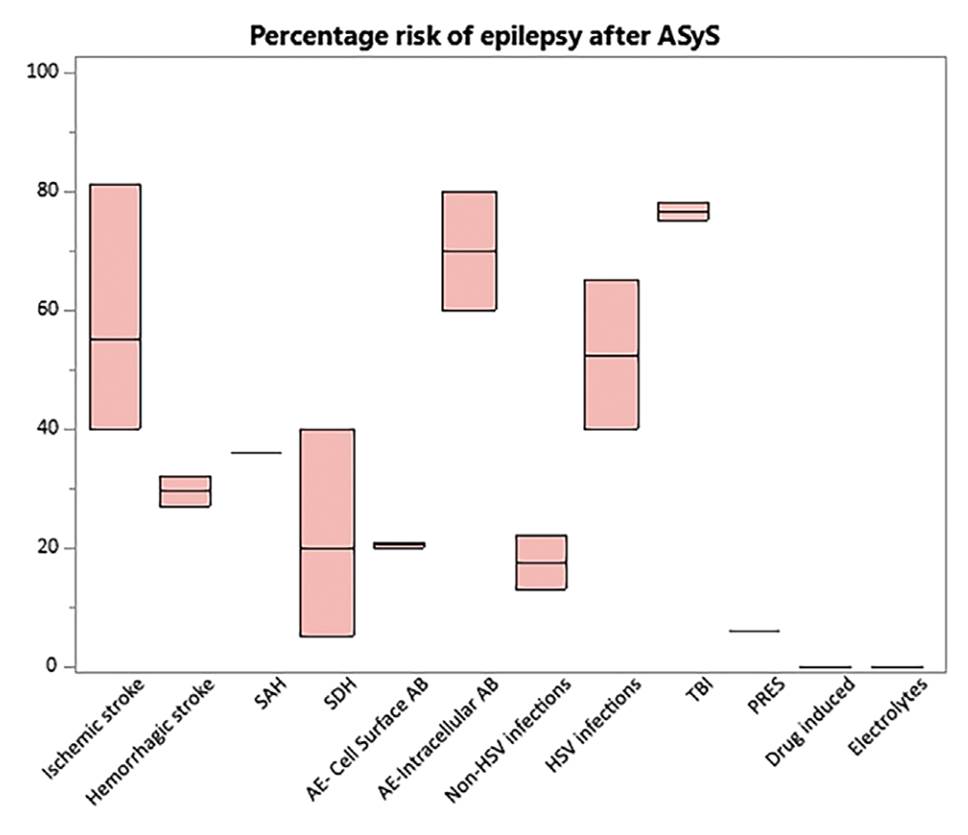
• Overall 18.7% risk of seizure recurrence, however a single
figure is not useful, given significant variation depending on aetiology (see
graph below).
• Prediction of risk
 l
l
Treatment:
Treatment
can be at different times for different reasons
• Primary prevention prior to insult (i.e before neuro-surgery)
• Prophylactic during actue insult to prevent acute seizures
• Prophyactic during acute phase to prevent long term epilepsy
• Post acute seizure to prevent recurrence
Primary prevention evidence
· Reduced acute symptomatic seizures, but does not reduce late seizures/remote symptomatic epilepsy
· In stroke limited studies, no clear benefit
· Some evidence of poorer rehabilitation outcomes in patients treated with ASM, effect also present with newer ASM